 DDRT
DDRTEnterprise healthcare platform
Run the whole hospital on one platform.
DDRT unifies clinical care, diagnostics, pharmacy, billing, supply chain, workforce, and finance in a single secure system — one patient record, one bill, one audit trail. So queues move faster, bills are right the first time, and staff spend their shifts with patients, not paperwork.
One patient record from registration to NHIS claim — care, pharmacy, labs, billing, stores, and finance in a single secure system. Queues move faster, and bills are right the first time.
Now choosing five founding hospitals — staged payments, founding pricing locked, source-code escrow. See the terms →
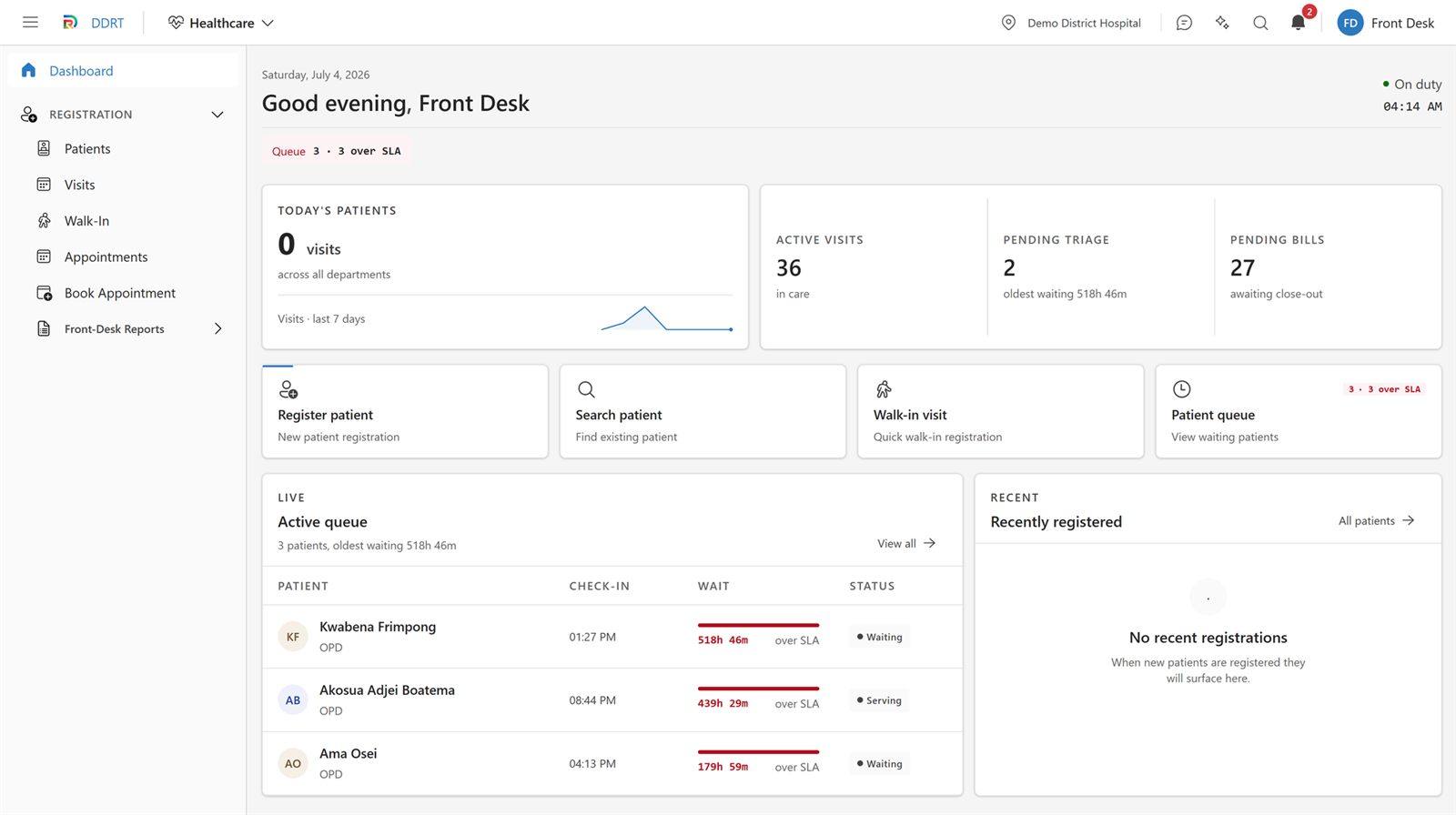
Live product — the front desk: today's numbers, the live queue, one-click registration. Test data.
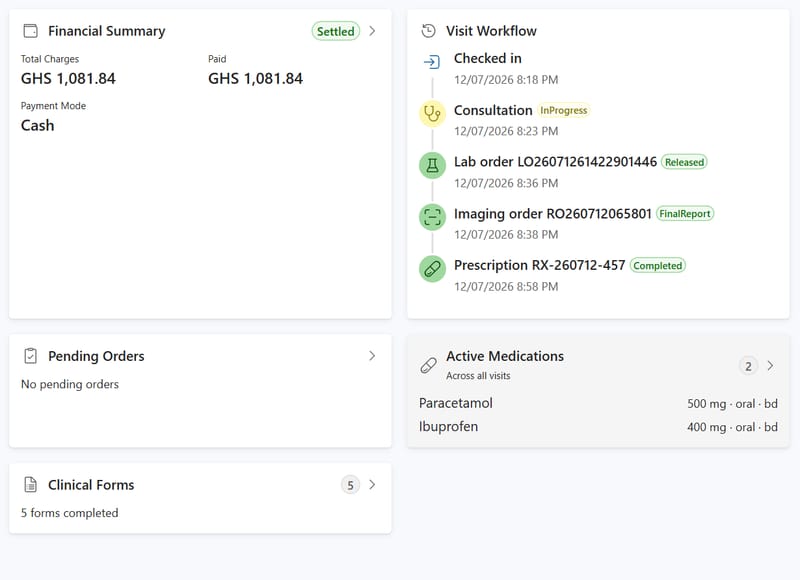
Live product — the patient folder: the bill and the care timeline on one record. Test data.
The problem
Fragmentation is the most expensive system you run.
Services get done but never reach the bill. The monthly NHIS claim takes an officer days by hand — and paper claims are rejected far more often than electronic ones. Systems die when the network does. Every gap costs money, hours — and in healthcare, outcomes.
In fragmented hospitals, services delivered in one department routinely never land on the bill — the systems between them don't talk.
Paper NHIS claims are rejected around ten percent of the time, versus one to three percent submitted electronically.
Nonvignon et al., 2022The national platform has suffered documented multi-day outages — and the private sector can't buy it anyway.
Business & Financial Times, 2025The DDRT answer
One platform. Every operation. Zero seams.
DDRT replaces the patchwork with a single platform where a prescription, an invoice, a stock movement, and a journal entry are the same record — seen from different desks. When every department works from the same record, reconciliation stops being a job.
See how the platform works →Platform
A platform, not a bundle.
Every module runs on the same secure core — one sign-in, one set of access rules, one audit trail. That's why DDRT deploys as one system, not eleven separate projects.
Explore the architecture →Modules — hover any
Products
Every department. One system.
Eleven modules on one patient record and one ledger. Pick a department — this is the actual product, not a diagram of intent.
The patient's whole journey in one record.
- Registration to discharge in one flow — OPD, inpatient wards with MAR and flowsheets, maternity, ICU, and emergency.
- Configurable clinical forms with safety checks at the point of order.
- Vitals flow forward — the doctor never re-types what the nurse recorded.
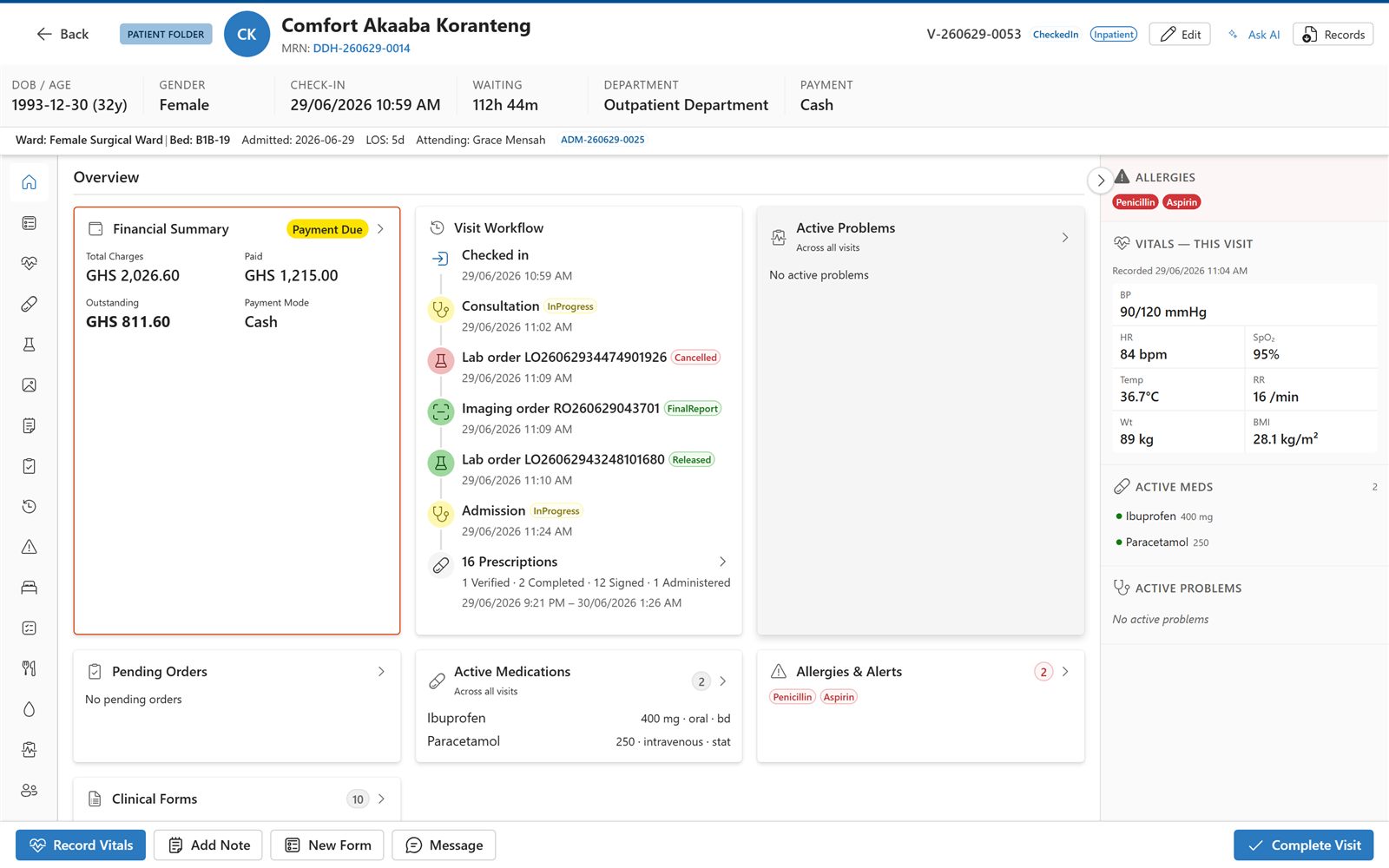
Live product — the patient folder: one record, every department. Test data.
Every service billed, every claim clean.
- Charges post at the point of care; the payer's share and the patient's share split automatically — cash, NHIS, private insurers, and corporate schemes, each by its own rules.
- The monthly NHIS claim file generates in seconds — ICD codes mapped to G-DRG, per-encounter CCC.
- Deadline tracking and a rejection dashboard stop repeat rejections.
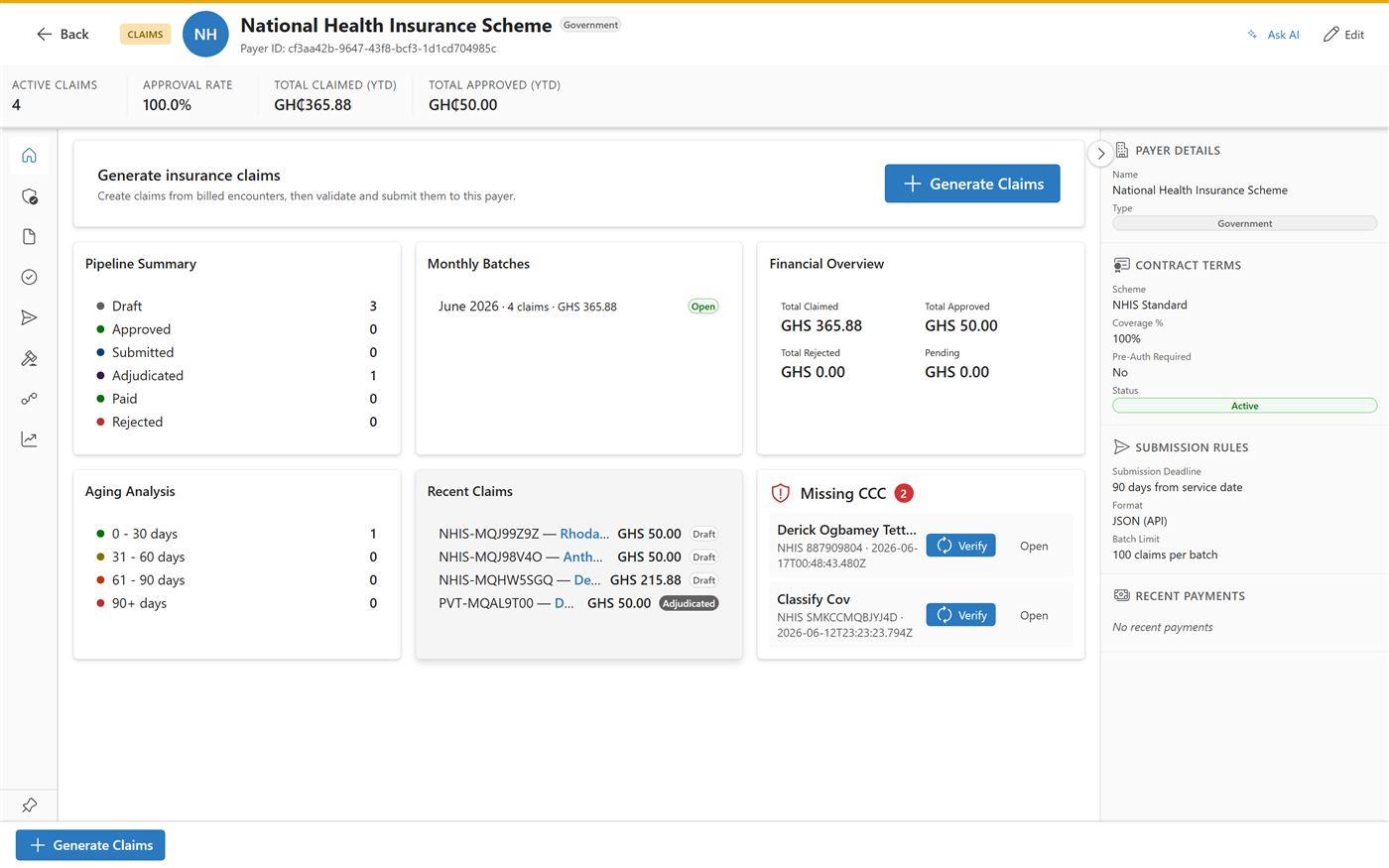
Live product — NHIS claims workstation, test data.
Order to specimen to result to report.
- Laboratory and radiology on one workflow, with analyser integration over HL7 and ASTM.
- Imaging over DICOM with PACS — reports and images on the same record.
- Results land in the patient folder and on the bill at the same moment.
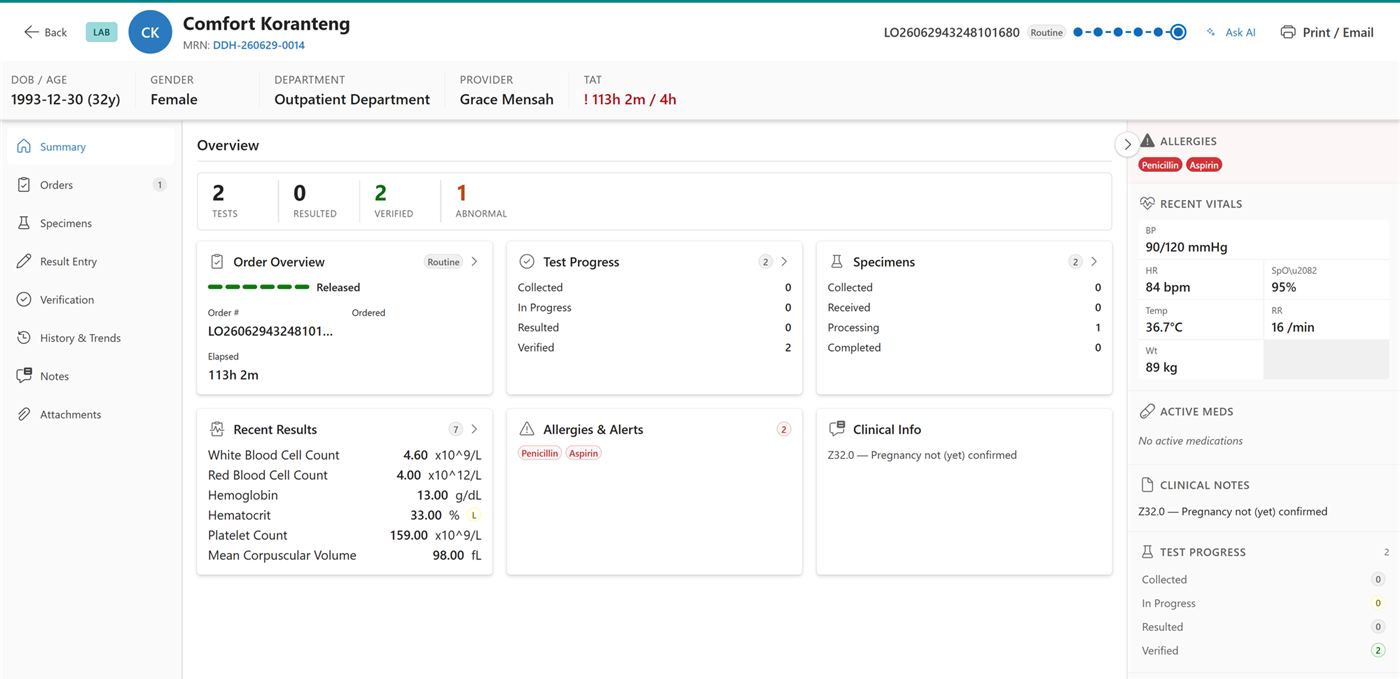
Live product — laboratory workstation, test data.
Checks the prescription, the stock, the payer, and the history.
- Batch and expiry tracking, refills, ward stock, and controlled-substance accountability.
- Nothing leaves the shelf without the safety and coverage checks passing.
- Every dispense updates the bill and the stock ledger automatically.
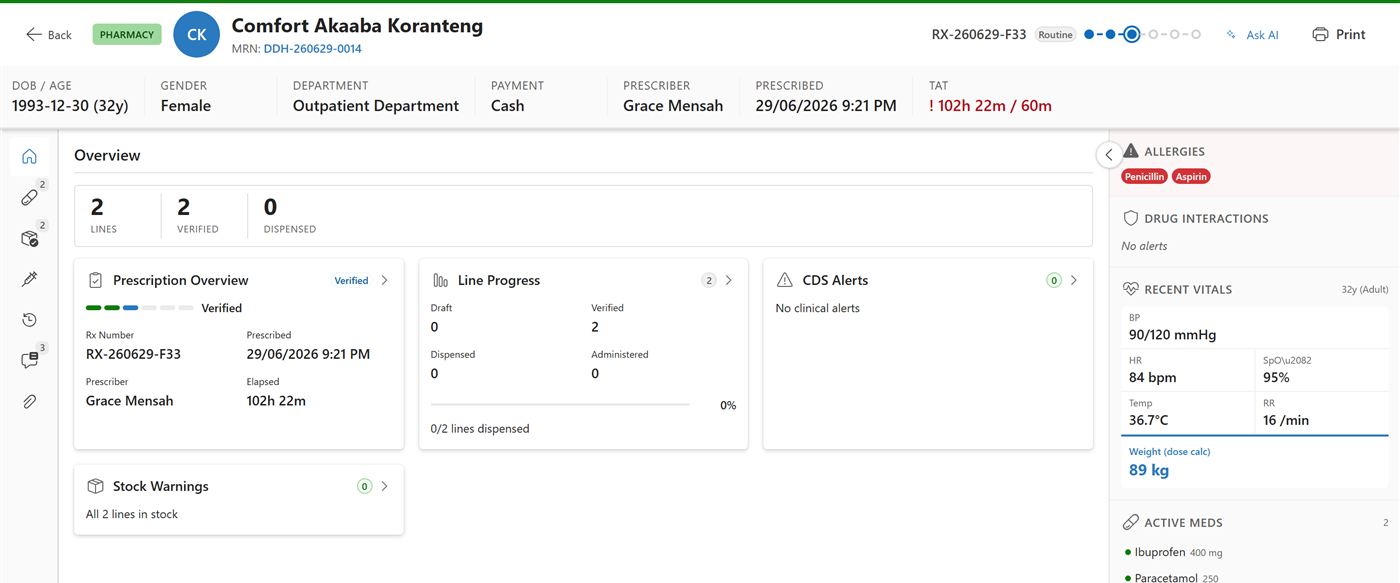
Live product — pharmacy workstation, test data.
Fertility care from first consult to outcome.
- Couples, cases, and treatment cycles — IUI, IVF, ICSI, and FET — with every milestone on one governed record.
- Cycle monitoring, embryology and lab worklists, and cryo-storage tracking with maintenance audits.
- Consent is enforced, not assumed — a cycle cannot start until the signed consents for that treatment are in place.
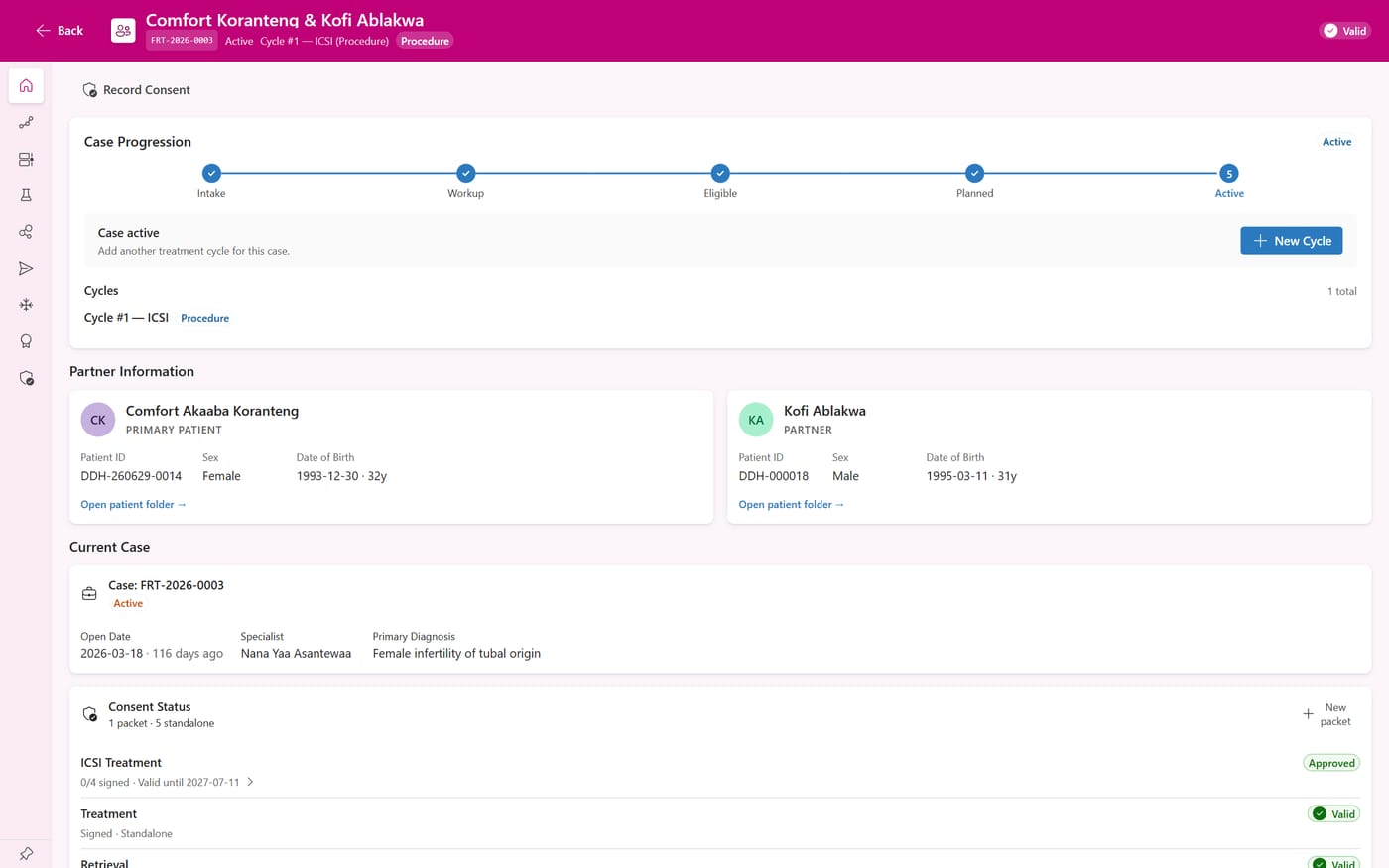
Live product — fertility case workstation, test data.
Procurement to consumption, one stock ledger the whole hospital trusts.
- Requisitions, purchase orders, receiving, and ward stock in one chain.
- Automatic costing on every movement — no month-end stock mysteries.
- The storeroom, the pharmacy, and the general ledger always agree.
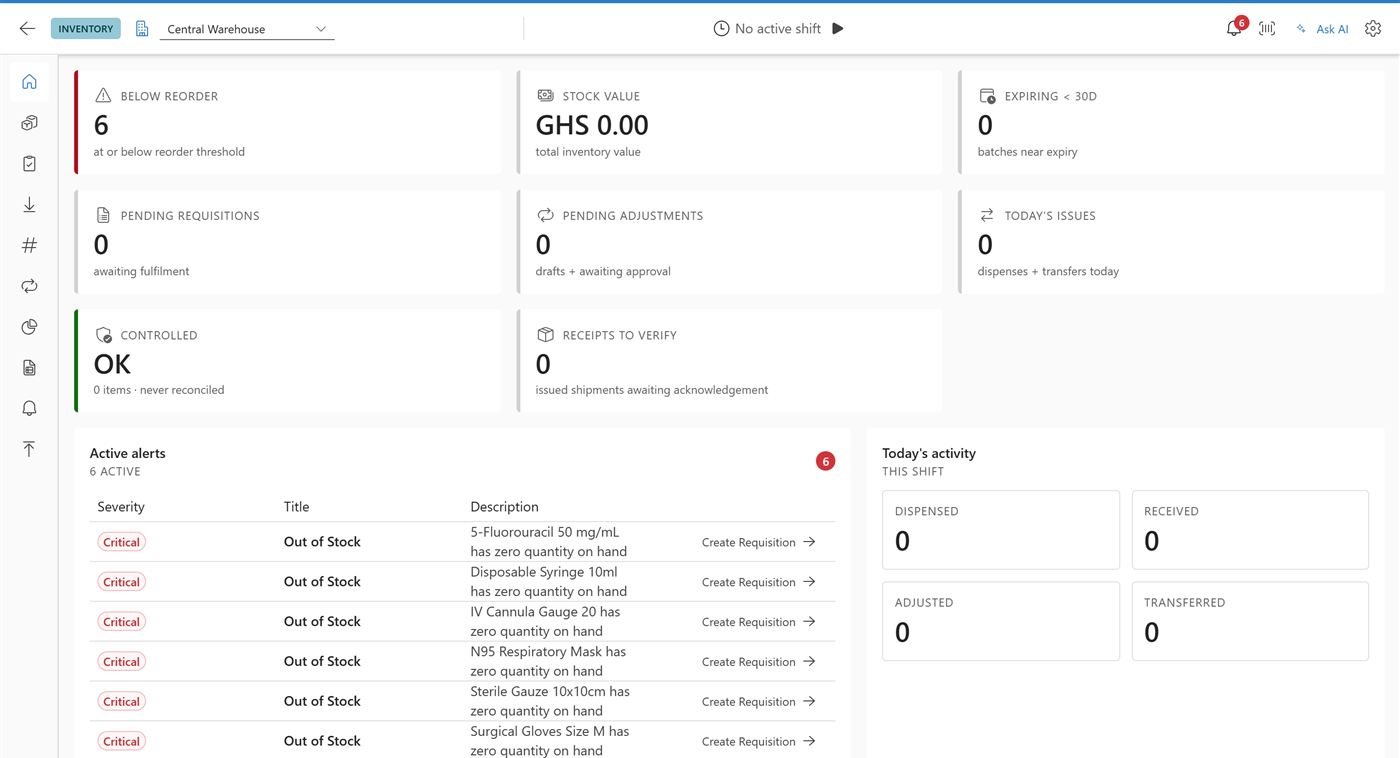
Live product — inventory workstation, test data.
HR, payroll, and attendance for institutions that never close.
- Employee records, leave, shifts, and time & attendance with self-service.
- Gross-to-net payroll with statutory deductions built in.
- A payroll run your finance team can audit line by line.
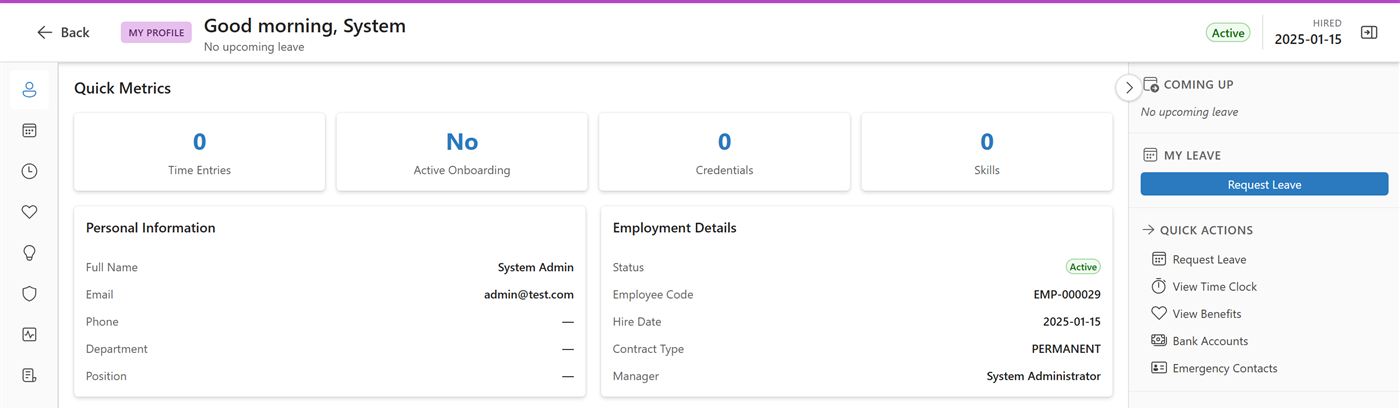
Live product — employee self-service workspace, test data.
A real general ledger — not an export to someone else's.
- Full double-entry ledger with IFRS-grade reporting, period close, and consolidation.
- Every clinical and operational event posts automatically — balanced, always.
- Ghana tax handled: VAT, NHIL, GETFund and withholding built in.
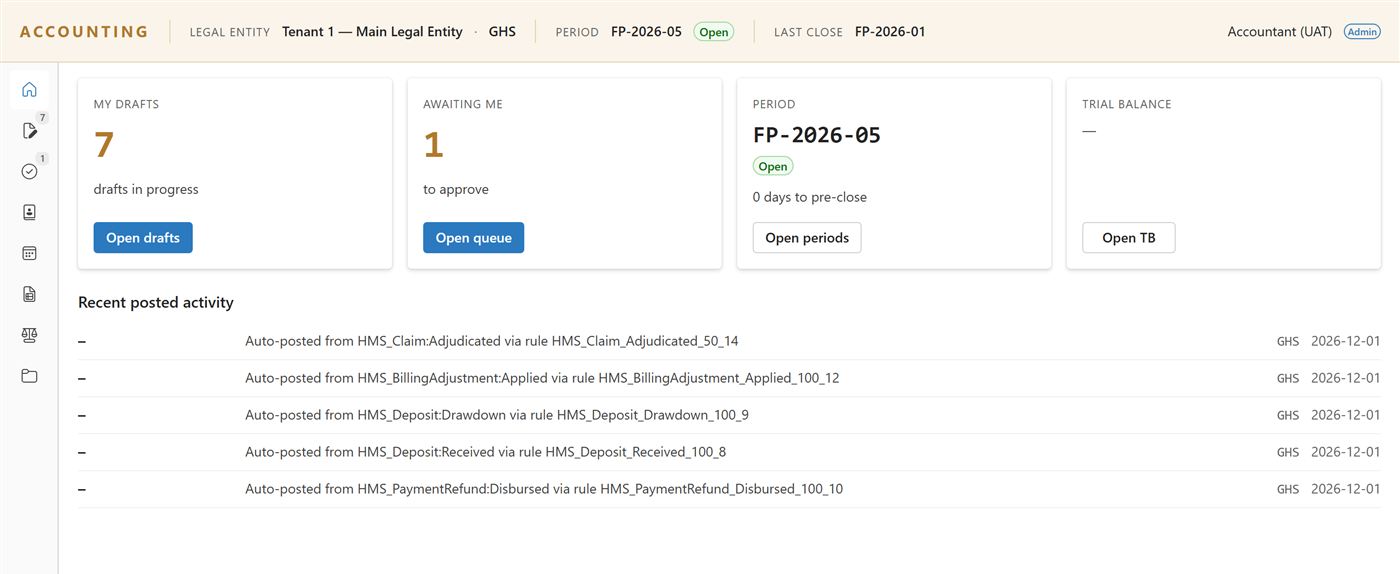
Live product — accountant workstation; note the journals auto-posted from clinical events. Test data.
Live numbers, not last month's exports.
- Dashboards on live operational data — census, revenue, stock, workforce.
- DHIMS-2 and NHIA submissions generate from the same numbers leadership sees.
- Ask a question at 9:00, act on the answer at 9:05 — no spreadsheets.
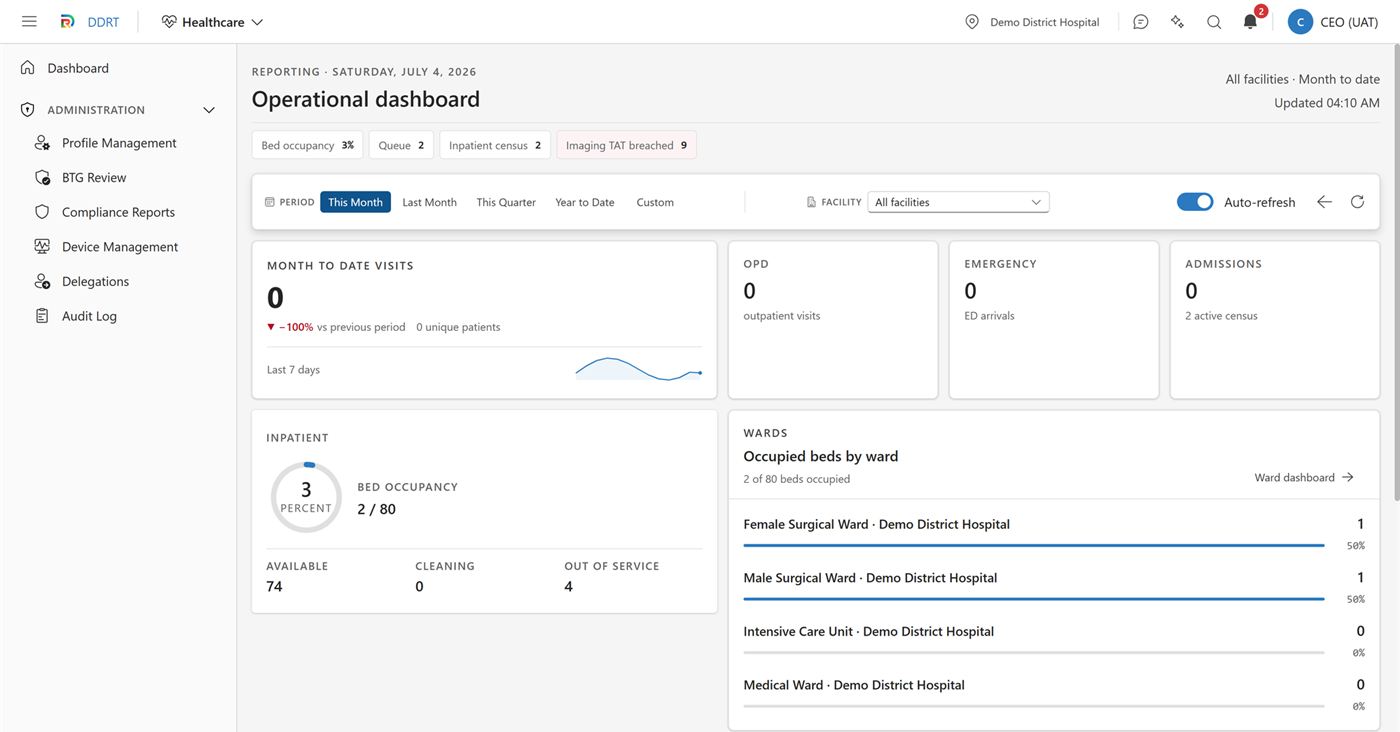
Live product — operational dashboard (leadership view), test data.
Your hospital, in your patients' pockets.
- A portal your hospital brands as its own — appointments, prescriptions, results, and payments from any phone.
- OTP sign-in and WhatsApp reminders; no app store required.
- Teleconsultations run on the same record as every in-person visit.
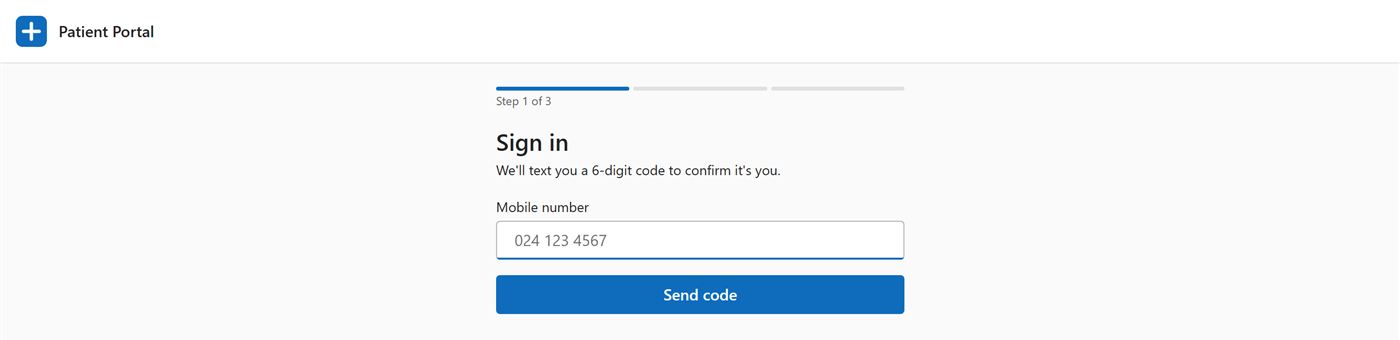
Live product — patient portal (PWA), OTP sign-in.
Point of sale that posts to stock and the ledger.
- Pharmacy counters, retail, and wholesale — shifts, tills, and promotions.
- Mobile-money and card tenders alongside cash, reconciled per shift.
- Offline capture with queued sync — designed so a network cut doesn't stop the till.
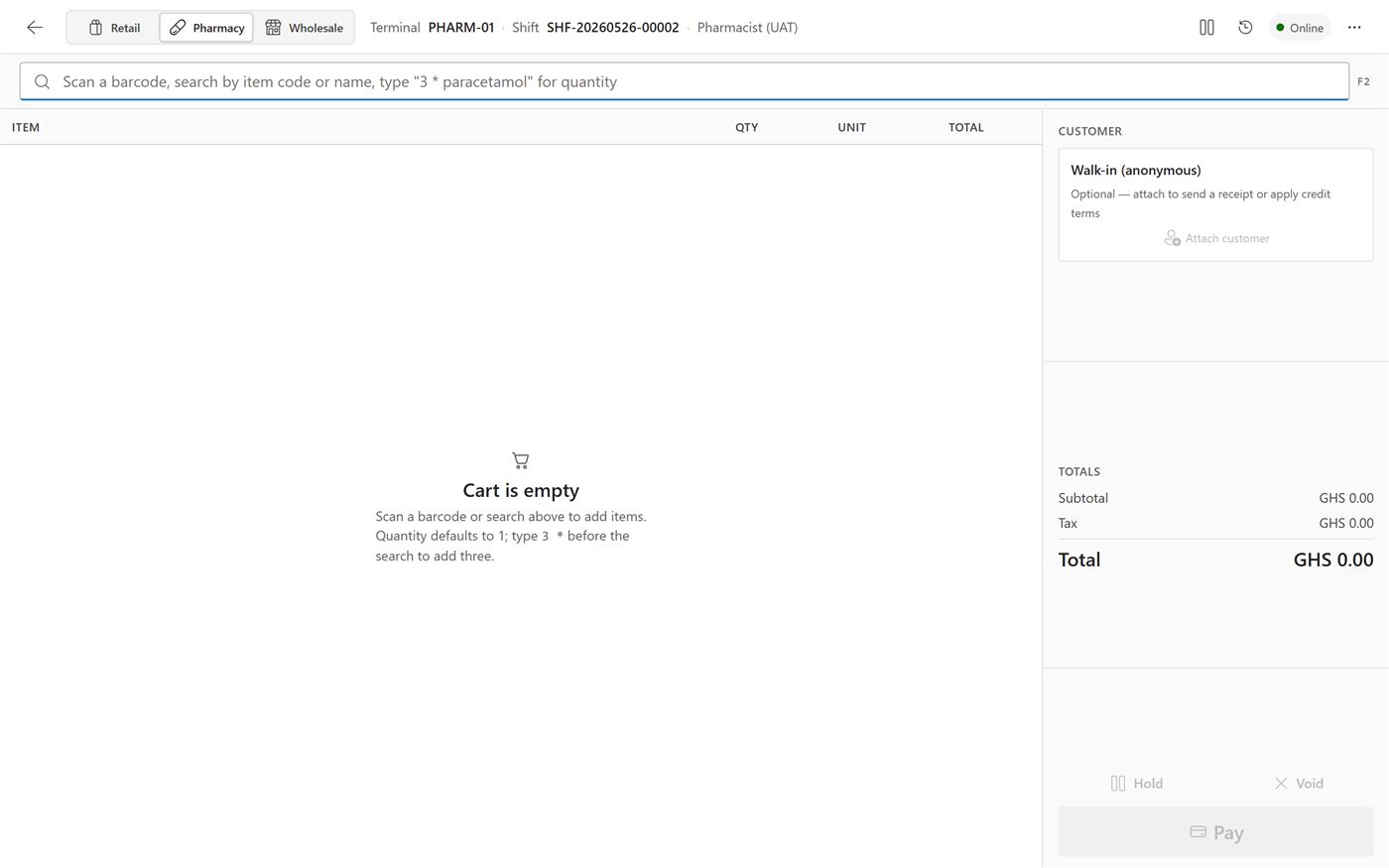
Live product — point of sale, pharmacy terminal, test data.
Why DDRT
Built for everyone who keeps the hospital running.
The whole institution, one screen.
Census to cash position, live. Decisions made on today's numbers, not last month's exports — and a system your hospital owns and controls.
One system to secure, integrate, upgrade.
One permission model, one integration surface, one upgrade path — and you manage users, roles, and access yourself. No ticket, no waiting on us.
Rounds without the folder chase.
Orders, results, and notes follow the patient — and vitals flow forward, so nothing is re-typed or lost between shifts. Safety checks fire at the point of order, not after.
Fewer screens. Faster shifts.
Orders, results, dispensing, and billing in one flow. Enter it once; it's everywhere it should be — including the bill.
Security & trust
Security is the architecture, not a feature.
Deny-by-default permissions. Field-level access control. A complete audit trail on every write — and on reads of sensitive records. Encryption in transit and at rest. Runs entirely on your own hardware if you choose — with AI that runs locally on the same box, so patient data never has to leave the building.
Read the security overviewAI on the platform
Intelligence where the work happens.
Assistants embedded in every workstation — summarizing patient timelines, drafting claims, flagging stock-outs before they happen. Grounded in your institution's data. Governed by your institution's permissions. And able to run entirely on your own hardware.
How DDRT applies AI →Placeholder — assistant shown with test data.
Founding hospitals
Be first. On terms that make first safe.
We're choosing our five founding hospitals now — five slots, then founding terms close. You get a finished system, and a vendor with everything to prove. We'd rather show you the system live than send you slides — and we'd rather earn your trust than ask for it.
Explore the Founding Programme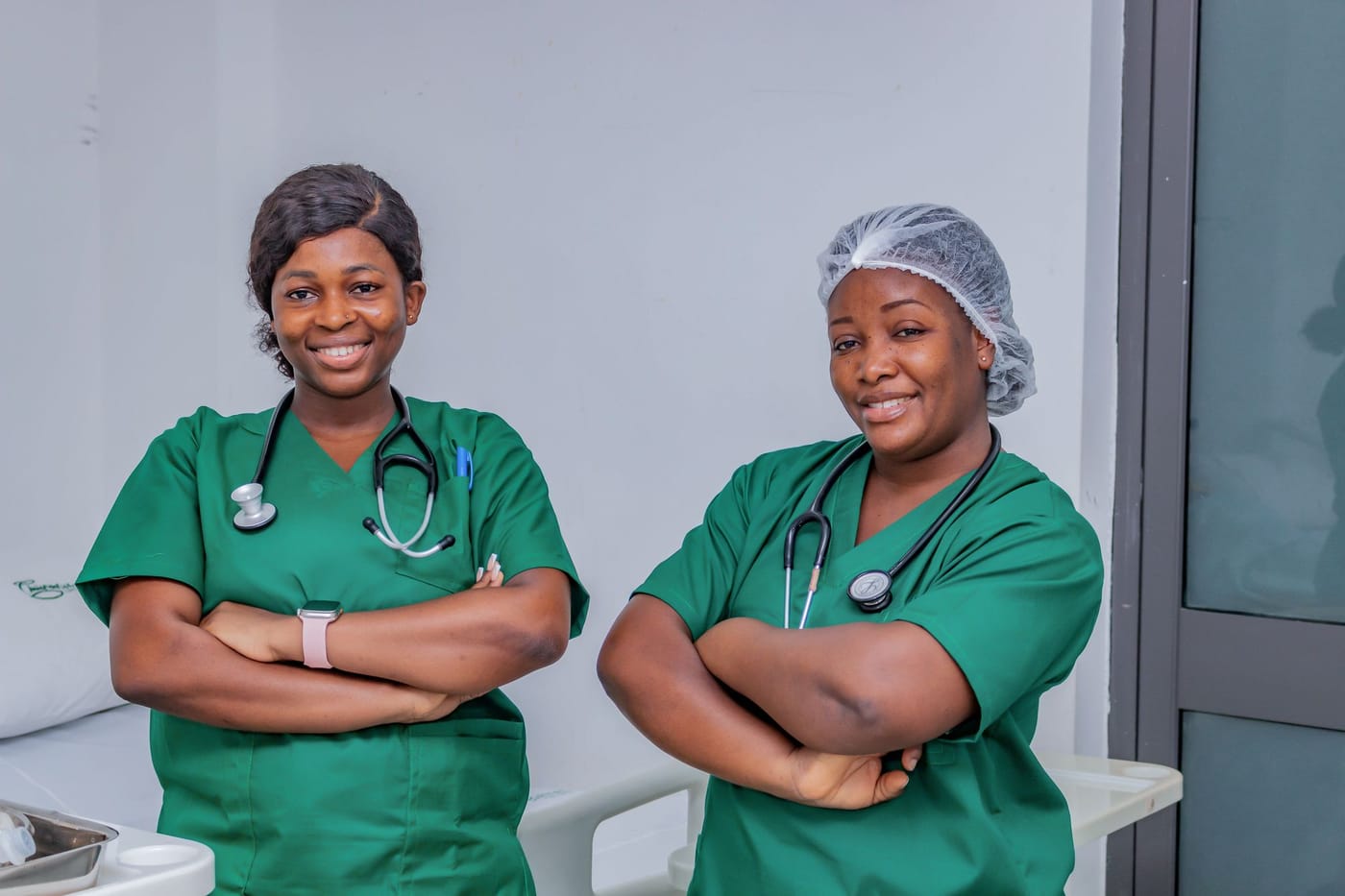
Why we built DDRT
We watched services get done and never billed, and systems die when the network does. DDRT is the system we wished we'd had.
Integrations
Plays well with the systems you keep.
Built for healthcare first. The same core also carries distribution and retail products, demonstrable live — the platform story.
Next step
See your hospital run on one platform.
A 45-minute working session with our team — the real product, walking scenarios from your institution. No slideware. Bring your hardest workflow.
WhatsApp line: 020 795 5521 · Direct line: +233 55 150 4989. We reply within one business day. Founding-hospital conversations go straight to the engineering team.
Wondering what it costs? Straight answer in the founding FAQ →